

Wild Rivers: Rio Grande Del Norte National Monument ( Rio Grande , Red River & The Confluence)
42 Miles to Wild Rivers Recreation area in Rio Grande Del Norte National Monument
Wild Rivers ( Río Grande del Norte National Monument)
The Wild Rivers Recreation Area, located near Questa in Northern New Mexico, offers an unparalleled backcountry fly fishing experience. Here, the Río Grande and the Red River slice through 800 foot volcanic basalt cliffs to meet at a spectacular confluence. This section is rugged, isolated, and holds some of the most pristine pocket water, deep pools, and wild trout populations in the Southwest.
Fishing Opportunities
As you hike down into the crystal-clear, deep pockets of the Wild Rivers canyon, you can expect to encounter a dynamic variety of hard-fighting fish species:
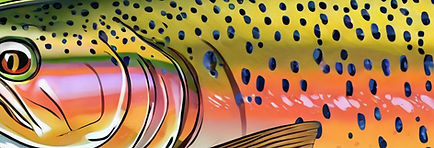
Río Grande Cutthroat Trout: New Mexico’s native treasure. While more common in the upper mountain tributaries, native cutthroats and cutbow hybrids can be found in the clean, oxygenated riffles of the main stem and near the Red River confluence. They are opportunistic feeders but highly prized.
Brown Trout: The undisputed kings of the deep gorge pools. The Río Grande holds a massive population of wild, stream-born brown trout. Renowned for their caution, these fish hide beneath massive basalt boulders and undercut canyon walls. Landing a wild 20-inch canyon brown is an unforgettable achievement.
Rainbow Trout: Plentiful throughout the recreation area, particularly near the confluence. They are actively supported by the Red River Fish Hatchery just upstream, creating a consistent, hard-fighting fishery in the swifter currents.
Backcountry Fishing the Río Grande Gorge
Fly fishing the Wild Rivers Recreation Area is as much an athletic trek as it is an angling adventure. The steep, 800-foot vertical descent into the Río Grande Gorge creates a pristine, sheltered ecosystem completely shielded from the high-plains winds above. Navigating this rugged river corridor requires scrambling through massive volcanic basalt boulder fields and picking apart a continuous puzzle of heavy pocket water, micro-eddies, and deep plunge pools.
Because reaching the water requires hiking down steep, demanding canyon switchbacks—such as the La Junta, Big Arsenic, or Little Arsenic trails—fishing pressure remains remarkably low compared to easier access points on the river. Anglers willing to make the strenuous hike are rewarded with unpressured, wild canyon trout that are highly responsive to well-presented flies.
Wild Rivers Anglers Guide
Month | Quality | Water Conditions & Notes | Target Species | Flies & Conventional Tackle |
Jan - Mar | Good to Fair | Winter low-water conditions. Look for slow, deep runs and seams. Wading is easiest now, but canyon paths can be icy | Brown, Rainbow Trout, Rio Grande cutthroat trout | Flies: Midges (Size 20-24), Baetis Nymphs, small Zebra Midges. Conventional: Small inline spinners fished ultra-slow and deep. |
April - June | Poor to Dynamic | Early spring can bring great fishing, but late May through June hits peak mountain snowmelt runoff. High, fast, muddy, and dangerous flows on the main stem. Fish the upper trails or target the confluence carefully. | Trout pushed tight to the canyon banks. | Flies: Heavy Stonefly Nymphs, San Juan Worms, large Crane Fly Larvae. Conventional: Heavy spinners or spoons cast tight to the pocket edges. |
July - September | Excellent | Post-runoff peak season. Pristine water clarity, steady flows, and prime canyon conditions. The canyon depths shade the water perfectly. | Active, surface-feeding Browns, Rainbows, and Cutthroats. | Flies: Terrestrials (Chubby Chernobyls, Foam Hoppers, Beetles), PMDs, Caddis Dries, Perdigons. Conventional: Panther Martins, Mepps spinners, small floating minnow plugs. |
October - December | Excellent to Fair | October brings the legendary pre-spawn Brown Trout bite and massive October Caddis hatches. November and December transition into late fall/winter patterns as ambient canyon temperatures drop fast. | Aggressive big Browns (October), holding winter trout (Nov-Dec). | Flies: October Caddis Dries, Woolly Buggers, Sculpin Streamers, Zebra Midges. Conventional: Brightly colored aggressive spinners or spoons. |
Access

Gear Recommendations for Wild Rivers
Rod & Reel Setup
The All-Arounder: A 9-foot, 5-weight rod is the gold standard for the canyon. It provides enough backbone to cast large foam grasshoppers or heavy double-nymph rigs while remaining delicate enough to presentation-dry flies in flat water.
The Big Water Setup: If you plan on swinging heavy streamer patterns for trophy browns in the deep pools, step up to a 9-foot, 6-weight rod. It offers the extra muscle needed to pick up heavy line out of rushing cross-currents.
Reel: A reliable disc-drag reel with a large arbor is essential. When a wild trout catches the main current and heads downstream over a boulder field, you need a drag system that won't freeze up under pressure.
Line, Leaders & Tippet
Line: A high-quality, weight-forward floating fly line (WF) handles 90% of your canyon needs, whether high-sticking nymphs or slapping terrestrial patterns against the rocks.
Leaders:
Dry Fly/Terrestrials: 9ft tapered leaders (3X to 5X).
Nymphing & Streamers: 7.5ft to 9ft stout leaders (2X to 4X) to handle the abrasion of volcanic rock and turn over split shot.Tippet: 3X to 5X fluorocarbon for sub-surface nymphing (highly abrasion-resistant against the sharp basalt boulders). Keep a spool of 4X or 5X nylon monofilament handy for dry flies to ensure a natural, floating drift.
Wading & Safety
Boots: The basalt rocks of the Río Grande are notoriously slick and uneven. Felt soles or high-traction sticky rubber boots loaded with metal studs are non-negotiable for safe wading here.
Wading Staff: Given the heavy volume of the river and hidden drop-offs between giant boulders, a sturdy wading staff is a life-saver when crossing or stabilizing yourself in swift water.
Pack Light: Remember that whatever gear you carry down into the 800-foot canyon must be hiked back up a steep, strenuous switchback trail at the end of the day.
Seasonal Essentials
Spring/Summer: High-altitude sun is intense. Pack a wide-brimmed hat, polarized sunglasses (crucial for spotting submerged boulders and tracking fish), and a high-SPF sunblock. The canyon walls trap heat, so bring twice as much water as you think you need.
Autumn: Fall brings spectacular weather, fewer crowds, and the legendary October Caddis hatch. Brown trout also become highly aggressive as they prepare to spawn. Pack breathable layers, as temperatures in northern New Mexico can plummet 40 degrees the moment the sun drops behind the canyon rim.