

The Big Four: A Deep Dive into the Fish of Eagle Nest Lake

Eagle Nest Lake, perched at 8,200 feet in the stunning Moreno Valley of New Mexico, is more than just a scenic stop on the Enchanted Circle. It is a complex, high altitude ecosystem where cold water specialists and hardy "warm water" survivors have carved out a unique coexistence.
Here is a look at the "Big Four" fish species that call these alpine waters home and how they manage to thrive together.
1. Northern Pike: The Apex Sport Fish
Status: Naturally Reproducing
Northern Pike have established themselves as one of the most exciting and sought after game fish in Eagle Nest Lake. Known for their aggressive strikes and powerful fights, they have turned the lake into a premier destination for anglers seeking a "water wolf" challenge.
How they live: Pike thrive in the shallow, weedy bays. They use the thick vegetation as camouflage, waiting motionless to ambush passing prey with a sudden burst of speed.
Survival strategy: Because they spawn in the early spring—often just as the ice is melting—they lay their eggs in the shallowest marshes. Their status as a top-tier predator ensures they play a significant role in the lake's biological structure.
2. Yellow Perch: The Prolific (but Changing) Schools
Status: Naturally Reproducing
While historically known for their massive numbers, the Yellow Perch population in Eagle Nest is currently in a state of flux. While still a favorite for fishermen when found, they have become a much rarer sight in recent years.
Why they are becoming more rare: Recent studies and shifts in management have impacted their numbers. Significant efforts have been made to harvest and relocate perch to stock other New Mexico lakes (like Abiquiu) to help establish forage bases elsewhere. Combined with increased fishing pressure and natural population cycles, these factors have led to a noticeable decline compared to the "overpopulated" years of the past.
How they live: Perch are social fish that travel in schools, cruising along the edges of weed beds or over sandy bottoms at moderate depths.
Survival strategy: Their strength has always been in numbers. By producing thousands of eggs in gelatinous ribbons, they strive to maintain a presence in the lake despite heavy predation and active removal efforts.
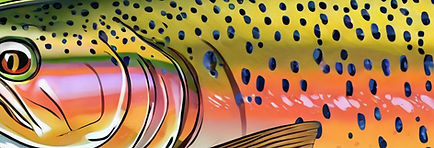
3. Triploid Rainbow Trout: The High-Altitude Athletes
Status: Stocked (Sterile) The "triploid" designation is a key management tool; these trout are pressure-treated as eggs to have three sets of chromosomes, rendering them sterile.
How they live: Because these trout don't spend energy on reproduction or spawning cycles, all their caloric intake is diverted toward growth and muscle development. You’ll find them in the cooler, deeper, oxygen-rich open waters.
Survival strategy: Being sterile allows them to reach trophy sizes much faster than wild trout. By occupying the "pelagic" (open water) zone, they stay away from the weed-choked shallows where pike hunt, allowing them to thrive in the deeper sections of the lake.
4. Common Carp: The Hardy Survivors
Status: Naturally Reproducing
Carp are the heavyweights of Eagle Nest, offering a unique challenge for fly fishermen and traditional anglers looking for a long, powerful fight.
How they live: Carp are bottom-feeders that root through the mud and silt. They are most active in the warmest, shallowest flats of the lake, often visible "tailing" during the summer months.
Survival strategy: Carp are incredibly hardy and can tolerate lower oxygen levels than trout. By feeding on detritus, insect larvae, and plant matter on the lake floor, they utilize a food source that other species largely ignore, filling a vital niche in the ecosystem.
A Balancing Act: How the Lake Sustains Them All
Eagle Nest Lake is a masterclass in niche partitioning. Each species occupies a different "neighborhood" to avoid constant competition:
Spatial Separation: The Rainbow Trout take the deep, cold center; the Pike haunt the weedy edges; the Carp vacuum the muddy flats; and the Perch move between zones as a versatile resident.
Resource Management: By stocking sterile Rainbow Trout, wildlife managers can ensure these fish grow to massive sizes without overpopulating, while the naturally reproducing Pike and the carefully managed Perch populations create a dynamic environment that draws visitors from across the country.
Whether you are casting into the weeds for a trophy Pike or searching for the now-elusive Yellow Perch, the diverse "neighborhoods" of Eagle Nest Lake make it one of the most productive and fascinating fisheries in the Southwest.
Comments